

By Jenna Fiaretti, Staff Writer
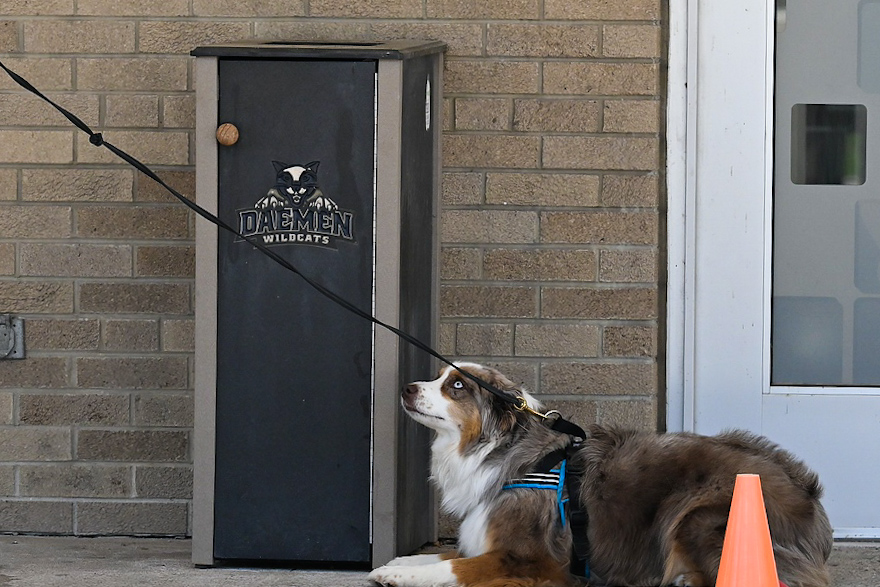
When the spring semester at Daemen concludes and residential students depart, Daemen’s campus gets a lot quieter. This doesn’t mean, however, that the campus is closed completely. Summer classes are in session and the campus becomes the temporary home for various programs like the USA Hockey camps and HEOP (The Higher Education Opportunity Program). A lesser known event that Daemen hosted this past summer were the scent work trials sanctioned by Do Over Dog Training.
What is Scent Work?
Scent work trials operate under the category of dog sports, which are largely recreational activities that focus on different aspects of dog behavior. Dog owners compete to earn titles, ribbons, trophies and prestige. Some commonly known ones include dog showing, obedience trials, trick dogging and agility trials.
Scent work, also known as nose work, is a relatively new dog sport. It was founded in 2006 by Ron Gaunt, Amy Herot and Jill Marie O’Brien under the National Association of Canine Scent Work (NACSW). Since then, it’s been picked up by other notable national and regional organizations, including the American Kennel Club (AKC), Canine Performance Events (CPE) and United States Canine Scent Sports (USCSS).
“The sport of scent work celebrates the joy of sniffing and asks a dog to sniff to their heart’s content, turning your dog’s favorite activity into a rewarding game. It is a terrific sport for all kinds of dogs and is a wonderful way to build confidence in a shy dog,” the AKC website states.
In a trial, dogs and their handlers are tasked with identifying a number of different essential oils scattered throughout an area. Essential oils such as birch, anise or clove are put into tins, called hides, and then are hidden in an area. The dogs then have to sniff out the hides and perform some sort of indication to let their handlers know that they identified the source of the scent. The handlers then inform the judges that a hide was found. This process repeats until all of the hides are found, after which the team is evaluated on speed, accuracy, and teamwork.
“There’s no money in scentwork, but the ribbons mean a lot. We have something in NACSW called Pronounced,” Lori Timberlake, owner of Do Over Dog Training said. “So, if the judge sees something special in the team, like really good teamwork… They’ll put a little ‘P’ on the score sheet. If they get pronounced in all their searches, they get an extra little ribbon. That’s usually what means the most to everybody. It’s all about the ribbons… and the brag pictures on Facebook.”
Like other dog sports, a big focus in scent work is to show off the bond between handler and dog. As a team works their way through higher and higher levels of competition, the trials get harder and the titles more prestigious. Unlike other dog sports, though, the sort of bond it fosters between the handler and the dog is distinctly different from what dog owners may be used to.
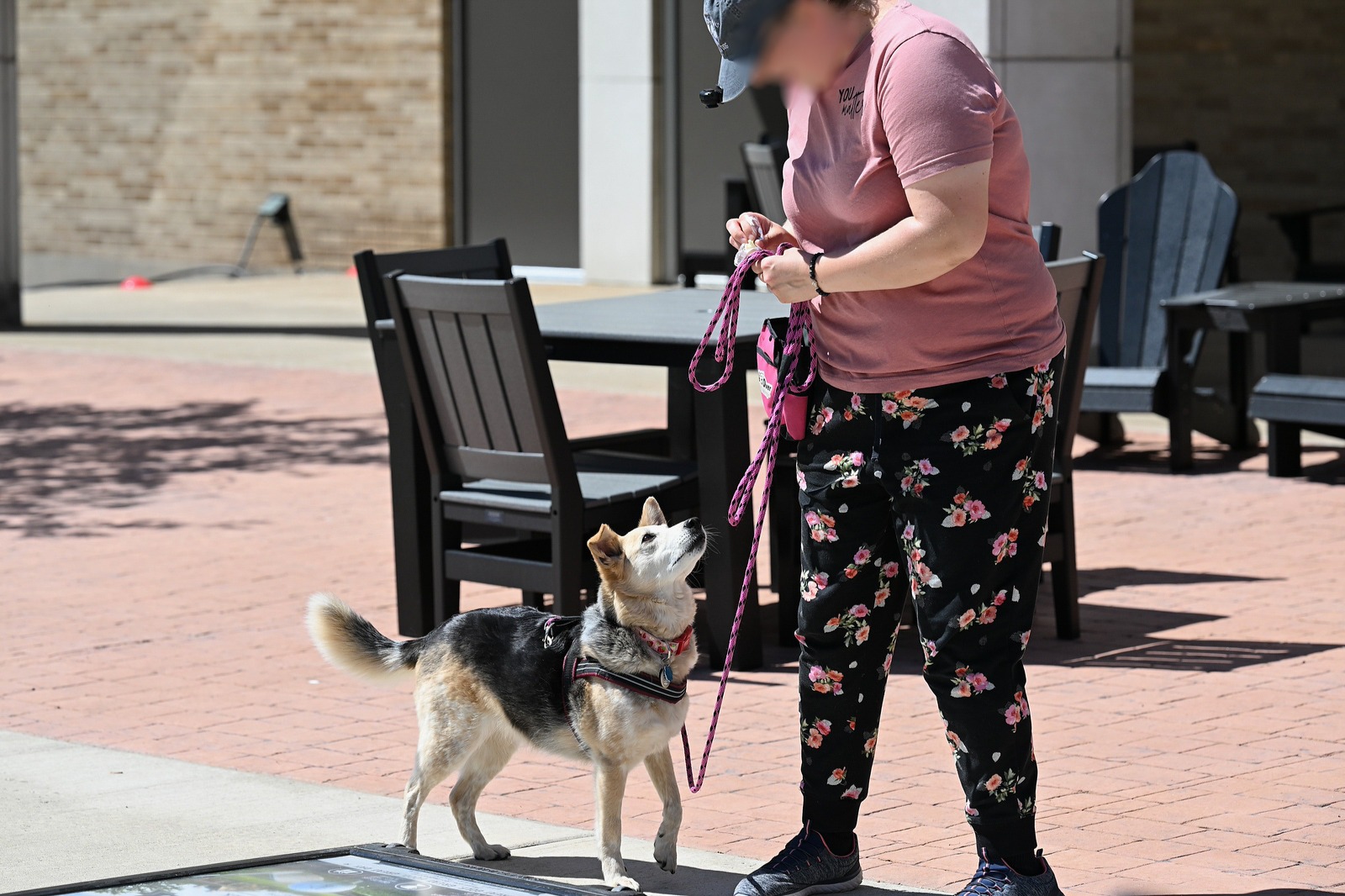
“It’s very opposite from other sports. It’s like the only sport I can think of where the dog is really leading and not the handler,” Timberlake said. “When I teach intro classes, sometimes it takes a few weeks for them to understand. Like, ‘You’re just staying here, the dog’s gonna go out there.’ They do become a part of the team… And they become able to read them… but I just want them observing in the beginning.”
Scent work is also unique because it does not require a lot of heavy physical activity. Instead of dogs and handlers having to run, jump, or retrieve, most of the work is mental. For the dogs, it hones their hunting and tracking instinct. For the handlers, it’s mostly about observing and identifying the dog’s body language. The hide isn’t considered found until the owner identifies the location through the alert.
“A lot of dogs have done agility and things, for which they have to be in good physical shape. But if the dog goes blind or if it’s a tripod… they can still compete in this,” Brenda Young, former environmental science professor and former chair of global and local sustainability said.
Young explains that this is similar for handlers as well.
“I actually ran in a trial once when I had a broken leg… and I was able to compete. It really works for a lot of different people.”
What Happened On Campus?
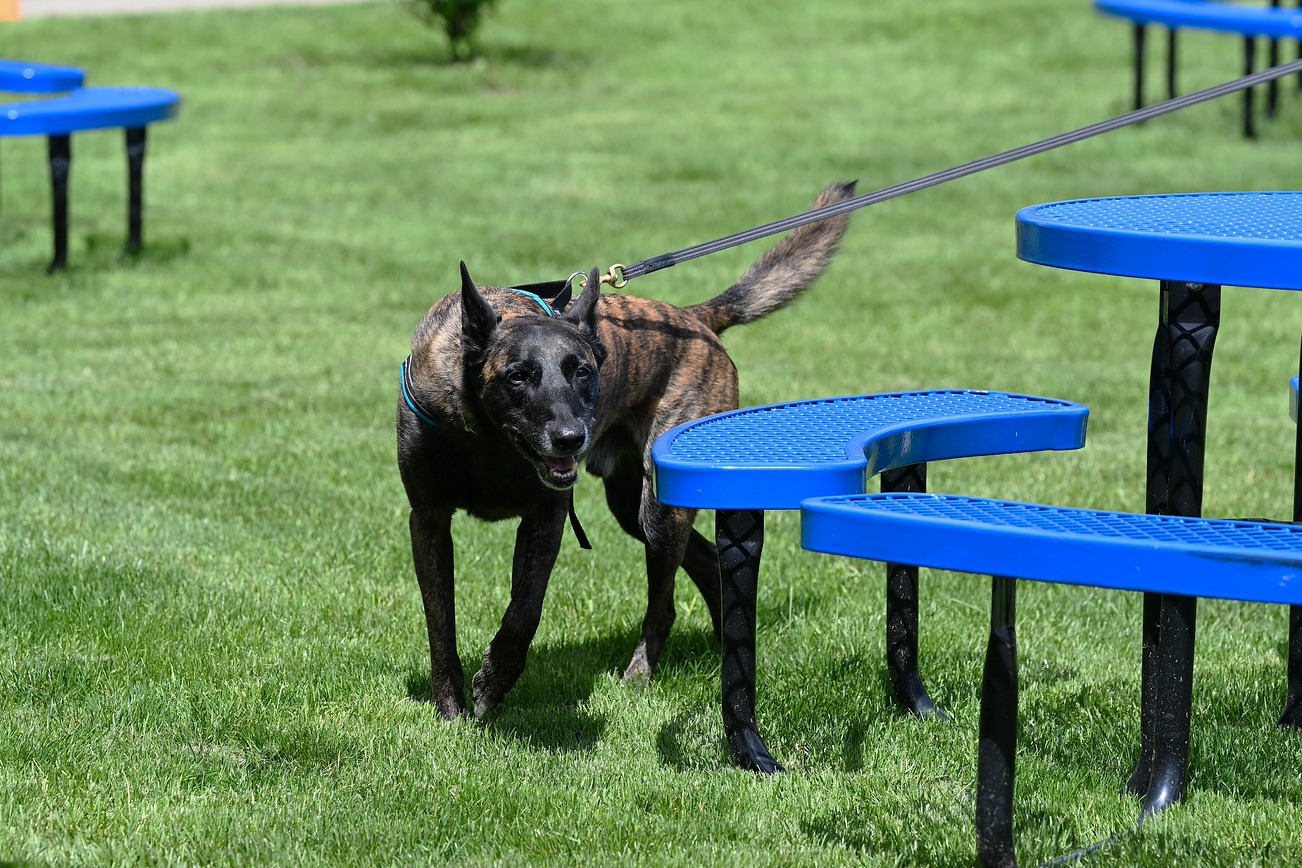
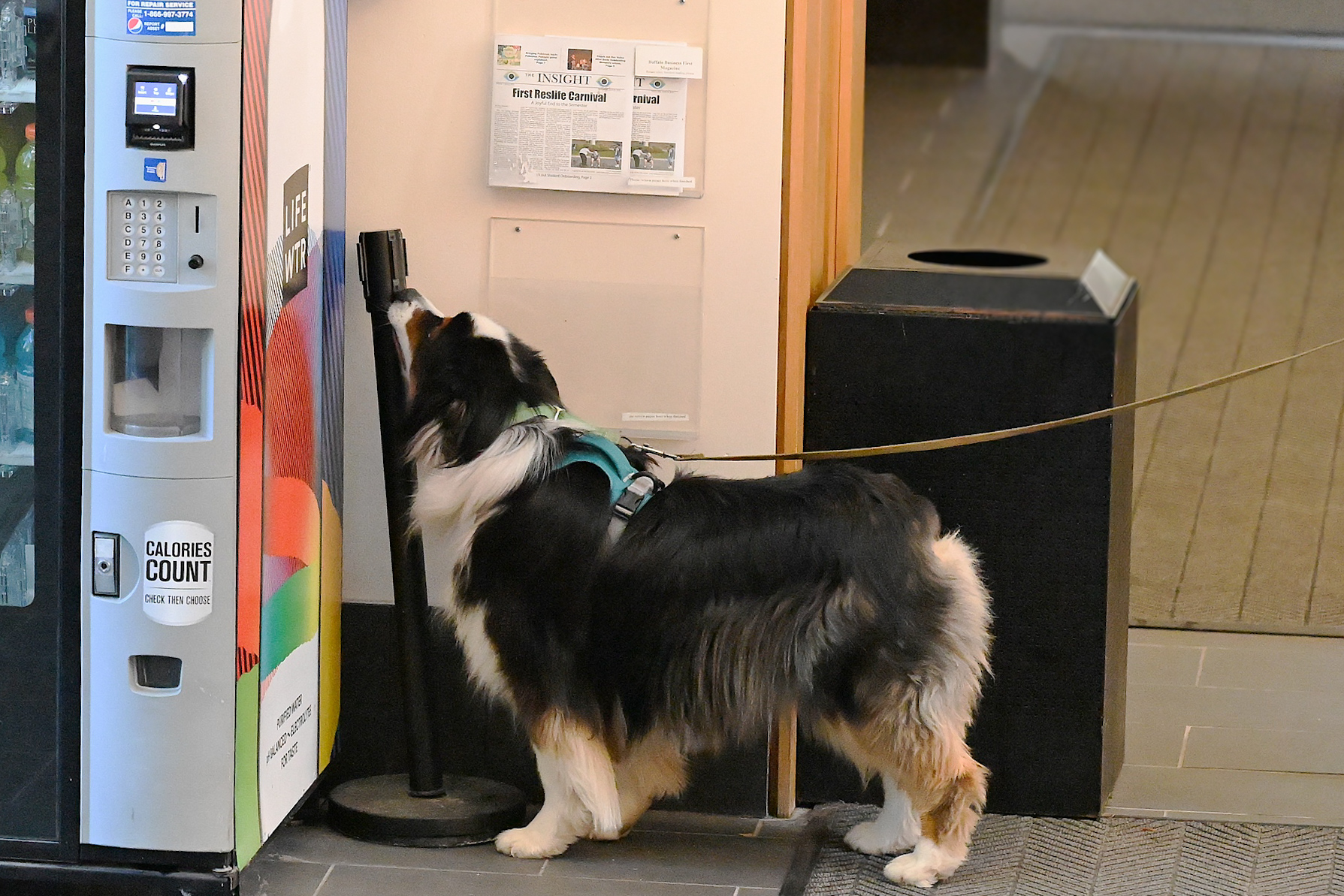
Do Over Dog Training hosted multiple NACSW scent work trials on Daemen’s campus over the span of two days. They booked specific locations on campus like the Daemen parking lots, DS Lobby, RIC Atrium, Daemen Hall, YSC back lawn, and YSC patio. All trials were at different levels of competition and took up a large portion of their respective days.
May 30’s trial was the NW3: the final standard competition level before dogs can enter the Elite division. This level introduces a lot more challenges to the game with larger areas, hides at different heights, new vehicles, new containers and mixed environments. It also introduces the idea of a ‘blank area’: an area without any hides at all. One error loses the team the title; more than one error loses them a qualifying score. If a team gets a qualifying score, they can retake the NW3 again and qualify in order to get a title.
“They don’t know how many hides there are, so they have to clear a space and not know if it’s zero, one, two, or three. Six searches in a day. It’s a very long day. That, I think, is the most difficult level, even though there’s levels past it,” Timberlake said.
According to the NACSW trial results page, 11 dogs got to take home their title while 7 dogs got their first qualifying score. The first, second and third place teams, each earning their titles with a perfect score, were Kathleen Vanderworken with “Sarge,” Tori Parrelly with “Viktor” and Amy Skinner with “Benny.”
The trials held on May 31st were a group of Elite trials, including Elite 1, Elite 2, Elite 3 and Elite Champion. Teams have to complete their NW3 before being able to compete in these trials. Instead of losing their qualifying score/title from their mistakes, teams in these trials don’t have to worry about deductions. Scores are instead calculated based on overall collected points.
“It’s four searches, very large areas, [and an] unknown number of hides. Could be zero to ten. They have to clear that space, find as many as they can, but they don’t have to be perfect like they do in the other levels,” Timberlake stated.
The NACSW trial results page states that 7 teams earned elite titles that day. Matthew Marion with “Snap” and Rebecca Fitzgerald with “Trim” both earned Elite 1 titles; Ann Smorado with “Hartley”, Rebecca Gerevics with “Azul” and Terrance J McCulle with “Kaylee” earned Elite 2 titles; Patricia Roach with “Magic” earned an Elite 3 title; and Kate Watson with “Hope” earned an Elite Champion title.
Out of all of the dogs competing on the 31st, the top overall placements were Terrance J McCulle with “Kaylee” in third, Bonnie Thomas with “Gabby” in second and Kate Watson with “Hope” in first place.
For both days, the Certifying Official, an NACSW representative that sets the hides and monitors the trial, was Jo Trent. Accompanying him were judges Brian Jordan and James Altman.
Why Daemen?
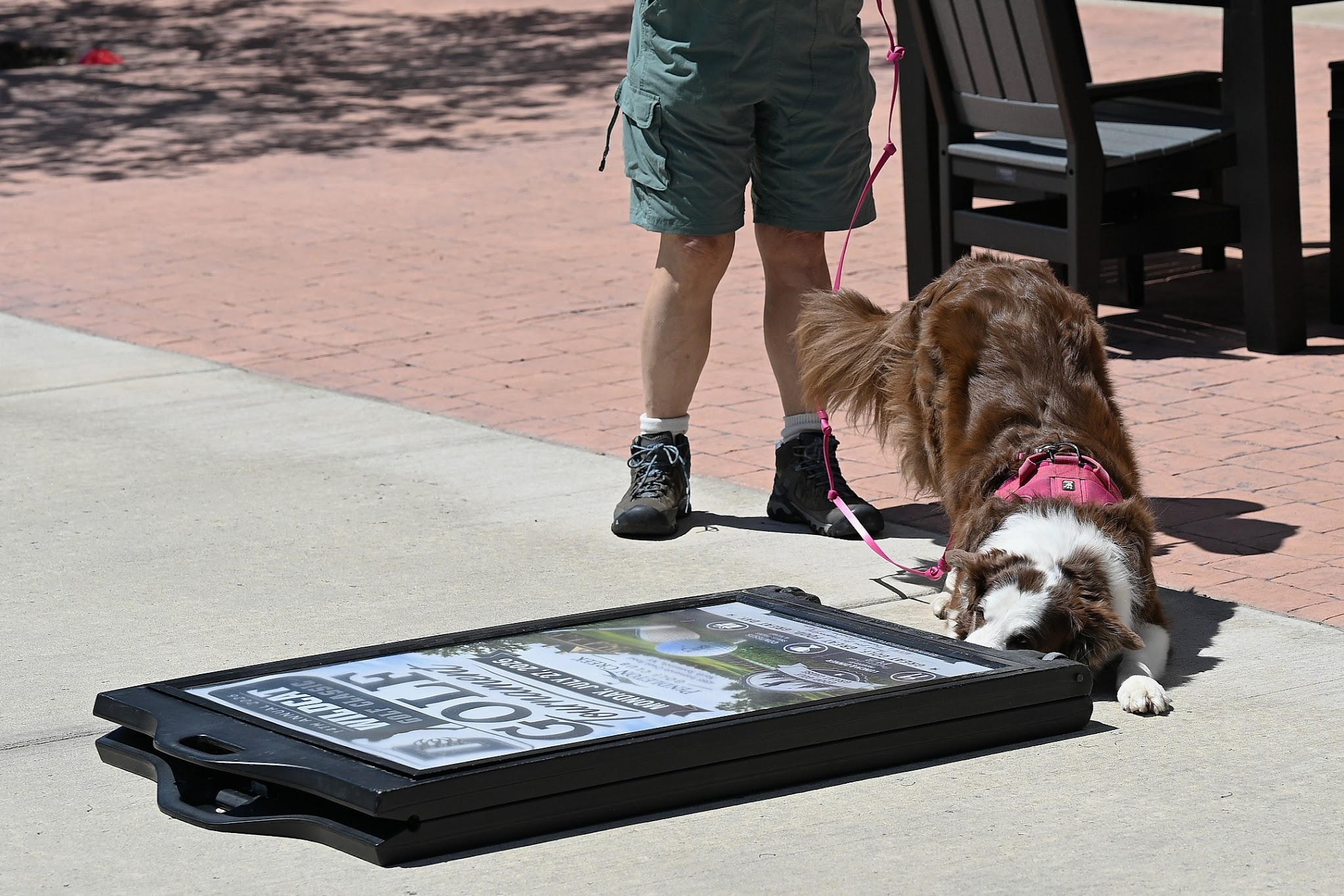
Do Over Dog Training and Daemen have been working together to host these trials for years now. The first scent work trial hosted on Daemen’s campus dates back to June of 2023.
“One of my students is Brenda Young who was an instructor here; she retired in the last couple years. She was like, “Hey, let’s talk to Daemen and see if they’re interested,’” Timberlake said.
The upper levels of scent work tend to include a lot of everyday environments. This can include vehicle searches in parking lots, on tables and chairs, in large rooms, and multiple distractions like people, cars and other unrelated scents.
“One of the challenges for having summer trials is finding a place where you can actually do it. It has to be big enough, and there have to be opportunities for interior searches, exterior searches and things along those lines. So, colleges are ideal situations. A lot of high schools and things won’t allow dogs in. So I said, why don’t you, y’know, let me ask?” Young said.
Since 2023, Do Over Dog Training has reserved space on campus for trials once a year every year sometime in late May or early June. They do this through Conference Services.
“We were reached out to by our former Brenda Young; she’s a former professor. She was on the board for a little bit. Got us connected with Lori from Do Over Dog Training to have this opportunity on campus. They book through us here in Conferences, and they are able to utilize certain spaces,” said Lauren Vohwinkel, director of Conference Services. “There are spaces that we cannot book for them because they’re more like classroom spaces …and just making sure that they are more secure for any students who have allergies. We’re also strategic in looking at what spaces are used, and any space that they go through has to be cleaned after.”
Since the scent work trials involve bringing animals to campus, handlers are encouraged to clean up after themselves and be respectful of campus spaces. Handlers are provided with a designated relief area for waste, but are free to walk around and explore public areas of the campus, like sidewalks and the Eco Trail.
“They’re super respectful of our Daemen spaces. Extremely cooperative. There’s not only people from Buffalo that come in for it, but people that come in from other states. They use the back parking lots. They keep the dogs hydrated, they keep it nice and shady down there, they put up tents… It’s really nice,” Vohwinkel said.
The arrangement is also important to a few Daemen alumni who are part of Lori’s classes. The trial being held on their former campus gives them an opportunity to come back and visit.
“They love coming back on campus and they love being able to bring their dogs,” said Vohwinkel, “There’s not only people from, like, Buffalo that come in for it, but there are people that come in from other states. …Aside from Daemen, it brings in someone who will say, ‘oh, my gosh, this campus is different.’”
Daemen University will continue to be the venue for Do Over Dog Training’s scent work trials for the foreseeable future. As shown on the NASCW trial calendar, next summer’s trials on campus are already scheduled for May 22 and 23.
“It’s a good opportunity not only to bring these really great groups to campus, but also to bring folks back on site and give them an opportunity to be in maybe a building or two that they may have really loved,” said Vohwinkel.
Anyone interested in learning more about Do Over Dog Training’s scent work classes or trials can reach out through their website or by emailing info@dooverdogtraining.com.
On Campus Booking
Conference Services is located on the second floor of the Yurtchuk Student Center. It is the office responsible for overseeing the ins and outs of all events on campus. They’ve helped coordinate anything from sports camps to weddings and are open to accommodate groups of any size.
If a non-Daemen department wants to book on campus, they first reach out to Conference Services. The Conference Services team will then review the proposal and create a contract for them to review along with a deposit for them to hold space. Once the contract is signed and deposit is received, Conference Services works on making sure doors are unlocked, parking needs are met, and figuring out other details to ensure the event runs smoothly. They then check in with whoever books the space one month, two weeks, then the week and day before the event in case there are any last minute changes.
“Anyone can book space on campus here at Daemen,” said Vohwinkel. “We work to do our best due diligence to make sure that whenever we book a group, we put the best foot forward with keeping the university, the mission, the vision, and our students in mind first.”
Anyone interested in booking space on campus for the summer semester or otherwise can reach out to Conference Services at events@daemen.edu or by calling (716)-839-8253.